Surviveware Small Waterproof Premium First Aid Kit (184 Pcs) for Travel, Camping, Home and Outd Review (2026)
Updated September 14, 2026 · Research-based review
Our verdict
A well-organized, sensibly sized first aid kit for one-bag travelers who want to cover common travel injuries without carrying a bulky trauma kit. Its 184 pieces and labeled compartments support our score of 8.6 out of 10, though independent testing found the case only minimally water resistant, not fully waterproof, in heavy rain.
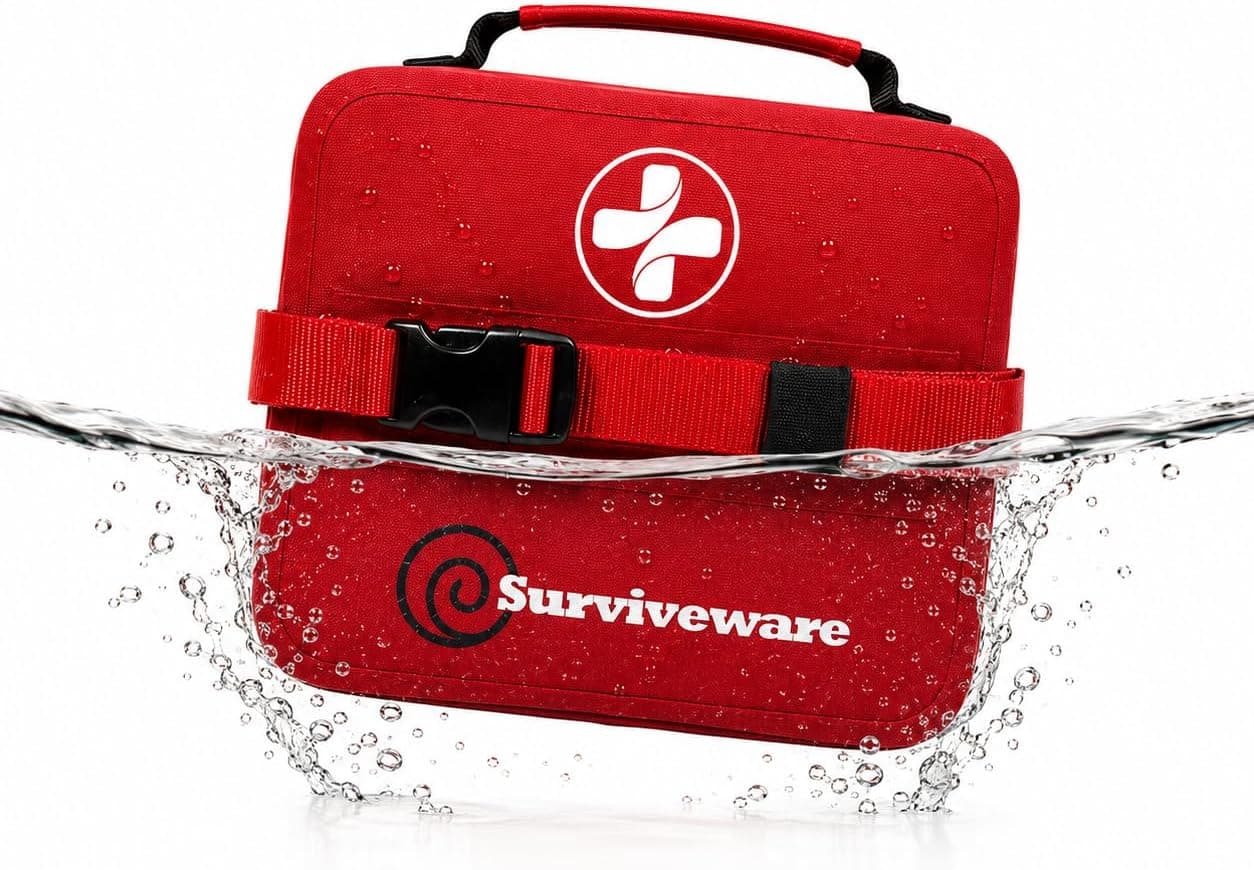
Surviveware's small waterproof premium first aid kit with 184 pcs, organized for travel, camping, home and outdoor use.
Price range: $$ (Mid-range)
What we liked
- + 184 pcs cover cuts, blisters, sprains and other common travel injuries
- + Compact case keeps small supplies organized in one pocket
- + Labeled compartments make items quick to find when someone is hurt
Trade-offs
- - Small kit is still no substitute for proper trauma supplies in remote areas
- - Larger than ultralight pouch kits, so carry-on minimalists may find it bulky
Who this kit is for
This kit is built for travelers who want a single, organized bag of supplies for the cuts, blisters, minor sprains and everyday mishaps that come up on the road, rather than a specialized wilderness trauma kit. With 184 individual pieces, it covers more ground than the smallest single-purpose kits while staying compact enough to fit in a daypack or the bottom of a carry-on. It suits city trips, road trips, camping and general outdoor use where the most likely injuries are minor rather than a scenario requiring advanced medical intervention days from help. Its size also makes it easy to keep in a car, a daypack or a suitcase without dedicating a large amount of packing space to it.
What is inside and how it is organized
The kit includes core supplies such as nitrile gloves, a CPR mask, cotton wrap, scissors, adhesive bandages, medical tape and gauze pads, aimed at the injuries travelers most commonly encounter. Independent review testing notes the kit does not include items with an expiration date, such as over-the-counter medications, antibiotic ointment or hydrocortisone cream, which some travelers may want to add themselves. Organization is a strong point: the kit uses a dozen or more labeled, mesh-fronted pockets printed with bold text so specific supplies can be found quickly in an urgent moment, plus an extra pocket for personal items, which is useful for adding prescription medication or a favorite pain reliever the kit does not include.
Build quality and water resistance
The case itself uses a rip-resistant exterior described by the manufacturer as fully waterproof, with contents further protected inside sealed laminate pouches, and a two-way zipper along with a snap strap for attaching it to a bag or belt. Independent review testing, however, found the case to be only minimally water resistant in practice, noting that water could seep in during heavy rain and dampen some contents despite the manufacturer's waterproof claims. Travelers heading somewhere consistently wet, like a rainy hiking trip or a boat, should consider a dry bag or extra waterproofing as a backup rather than relying on the case alone, even though the internal laminate pouches offer a second layer of protection for individual items.
Trade-offs against other first aid kits
Compared with Adventure Medical Kits' Ultralight and Watertight lines, which rank close behind it in this guide, this Surviveware kit trades some of the specialized wilderness-medicine focus for broader everyday coverage and clearer organization, making it more of a general travel kit than a backcountry emergency kit. Independent testing also flagged limited quantities of some supplies, such as only one gauze pad or trauma pad included, along with no blister treatment, so travelers doing serious hiking may want to supplement it with a few extra items, such as additional gauze or a blister treatment, rather than relying on the kit exactly as packed.
Verdict and who should pick something else
For most one-bag travelers, this kit's mix of broad coverage, clear labeling and reasonably compact size makes it a sensible single first aid solution for common travel mishaps. Anyone planning extended backcountry trips, multi-day hikes far from help, or activities with a real risk of serious injury should look at a kit built specifically for wilderness medicine, since independent testing found this kit better suited to day trips than extended remote travel. Travelers in consistently wet conditions should also plan for extra waterproofing given the gap between the manufacturer's waterproof claim and independent water-resistance testing, such as a dry bag or resealable plastic bags for the most moisture-sensitive supplies.
Frequently asked questions
Is this kit actually waterproof?
The manufacturer describes the case as waterproof, but independent review testing found it only minimally water resistant, with some seepage possible during heavy rain.
Does the kit include medication?
No, independent testing notes it does not include items with an expiration date such as over-the-counter medication, antibiotic ointment or hydrocortisone cream, so travelers who want those should pack them separately.
Is this kit suitable for backcountry hiking?
It is better suited to day hikes and general travel than extended backcountry trips, where a dedicated wilderness medicine kit with more supplies would be a safer choice.
How is the kit organized inside?
It uses a dozen or more labeled, mesh-fronted pockets so specific supplies can be located quickly, plus a separate pocket for personal items.
Prices change often, so check the current price and availability on Amazon.
Check price on AmazonOne Bag Picks may earn a commission from the link above.